
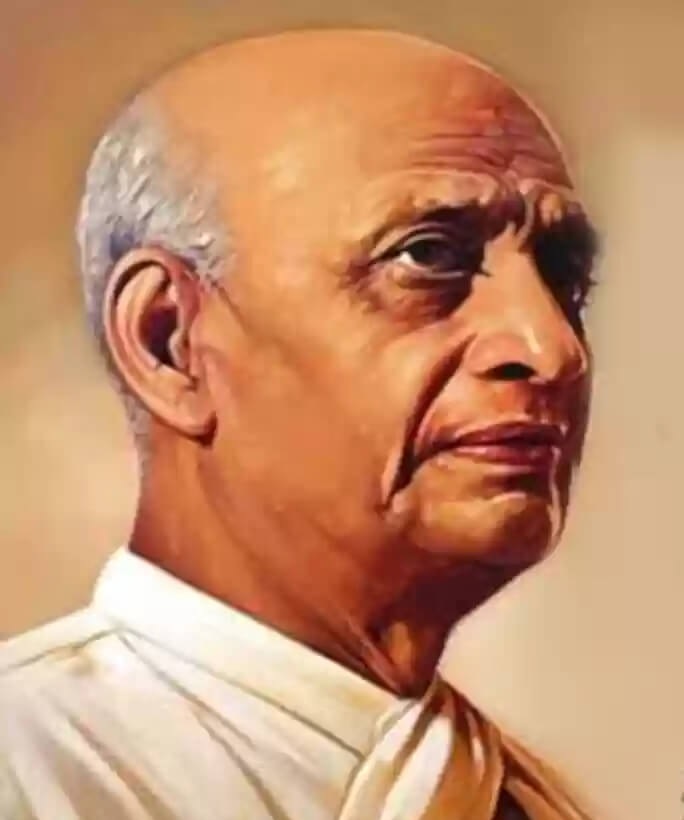
On October 31, 2026, India marks the 151st birth anniversary of Sardar Vallabhbhai Patel, the Iron Man of India and the principal architect of the nation’s political unification. Born on October 31, 1875, in Nadiad in present-day Gujarat’s Kheda district, Patel rose from a family of farmers to become a barrister, a key lieutenant of Mahatma Gandhi, and independent India’s first Deputy Prime Minister and Home Minister. His birth anniversary is observed as Rashtriya Ekta Diwas (National Unity Day), a tribute to the man who prevented the Balkanisation of the subcontinent by integrating over 560 princely states into the Indian Union.
The Meaning of National Unity Day
When the government instituted Rashtriya Ekta Diwas, it was intended to go beyond ceremonial homage. Each year, citizens take a unity pledge, and public institutions organise the “Run for Unity” and cultural programmes. The Ministry of Home Affairs frames the day as an opportunity to “reaffirm the inherent strength and resilience of our nation to withstand threats to unity, integrity and security.”
In practice, however, the day risks becoming another ritual. The real test is whether it can trigger conversations about what unity means in today’s India. Patel’s idea of unity was not uniformity; it was the ability to forge togetherness amidst diversity, while ensuring allegiance to a common Constitution.
The Post-Independence Challenge and the Process of Integration
At the moment of Independence in August 1947, the lapse of British paramountcy under the Indian Independence Act left roughly 565 princely states—covering nearly 40 percent of the land area and a quarter of the population—technically free to join India, join Pakistan, or declare independence. The risk of fragmentation into hundreds of weak, sovereign entities was real. Patel, heading the newly created States Department (with V.P. Menon as Secretary), treated this as an existential challenge. He warned that any failure to integrate the states would drive “a dagger into the very heart of India.”
Patel and Menon’s strategy was pragmatic and multi-layered. They devised the Instrument of Accession, under which rulers ceded only three subjects—defence, external affairs, and communications—to the Union while retaining internal autonomy initially. Standstill Agreements preserved existing arrangements. To ease the transition, Patel offered privy purses and the retention of titles and privileges. He appealed to the princes’ patriotism, cultivated personal relationships, and set a firm timeline. Most rulers signed before or immediately after 15 August 1947. Lord Mountbatten’s persuasion also helped with several prominent rulers.
A few cases required firmer measures. Junagadh’s Nawab acceded to Pakistan despite a Hindu-majority population and no contiguous border; popular revolt and Indian steps led to its integration, confirmed by a plebiscite. Hyderabad’s Nizam sought independence and allowed the Razakars to operate; Operation Polo in September 1948 brought the state into the Union. Jammu and Kashmir acceded following a tribal invasion. Within roughly two years, the map of more than 560 states had been consolidated, adding vast territory and population to the new republic.
This achievement embodied the ideal of Ek Bharat—one India. Patel’s vision of geographical, political, and economic unification transformed a patchwork of kingdoms into a single sovereign nation-state. Contemporary leaders have repeatedly linked this foundational work to the modern idea of Ek Bharat Shreshtha Bharat. Prime Minister Narendra Modi launched the Ek Bharat Shreshtha Bharat initiative on Patel’s 140th birth anniversary in 2015 to strengthen emotional bonds and cultural understanding among the states and Union Territories, carrying forward Patel’s emphasis on national integration.
Why Patel Matters Today- More than seventy-five years after his death, Patel’s legacy resonates in four important ways:
1 Federalism and diversity: Patel believed in a strong centre, but not in erasing local identities. He saw federalism as a negotiated partnership, not a central diktat. As linguistic, cultural, and developmental aspirations intensify, this balance between unity and regional autonomy remains critical.
2 Unity as institutional strength: For Patel, integration was not only territorial but also administrative. His reforms of the civil services underscored the importance of impartial institutions in holding the Union together. In an era of eroded trust in public bodies, this reminder is vital.
3 Resilience against fragmentation: Patel dealt with armed rebellion, princely resistance, and cross-border intrigue. Today’s challenges are different—from polarisation amplified by digital platforms to economic inequalities and alienation among the youth. Yet the underlying imperative is the same: preventing division from corroding the collective.
4 Global credibility: A cohesive India is not only stronger domestically but also more persuasive internationally. At a time when India seeks to project itself as a voice of the Global South, internal disunity weakens that claim. Patel’s legacy underscores unity as a strategic asset.
Beyond Symbolism
Anniversaries are often marked with commemorative coins, marches, and cultural events. These are welcome, but Patel himself was not a man of grand gestures. His politics was rooted in pragmatism, negotiation, and results. To honour him meaningfully on this 151st birth anniversary, commemoration must be coupled with substance:
•Addressing social divides: Unity cannot thrive in an atmosphere of mistrust or exclusion. Efforts to bridge communal and caste divides must be as central to Ekta Diwas as ceremonial pledges.
•Making youth stakeholders: Patel’s generation fought for unity against colonialism. Today’s generation must be engaged through civic education, volunteering, and dialogue, not token events.
•Strengthening institutions: From the judiciary to local bodies, fair and transparent institutions remain the glue of unity. Patel’s emphasis on administrative integrity remains a guide.
The Unfinished Task
Unity in India has never been a settled achievement. It has always been a process, renewed with each generation. Patel showed that it was possible to overcome distrust and fragmentation through vision and will. But his work remains unfinished.
On his 151st birth anniversary, the question is not whether we remember Patel, but whether we live up to his legacy. National Unity Day should remind us that integration is not a historical event, but an everyday responsibility—of governments to govern inclusively, of institutions to act impartially, and of citizens to value the collective over the narrow.
In commemorating Patel, India must pledge not just to preserve territorial unity, but also to nurture the social and moral unity without which even the strongest state structure will falter. Patel’s greatest gift was not the map he secured, but the belief that unity, once forged, could endure. It is for us to prove him right. His enduring monuments include the Bharat Ratna (awarded posthumously in 1991) and the world’s tallest statue—the 182-metre Statue of Unity on the Narmada River near Ekta Nagar in Gujarat, inaugurated on his 143rd birth anniversary in 2018. Yet the seamless map of India that citizens take for granted remains his most lasting achievement.