
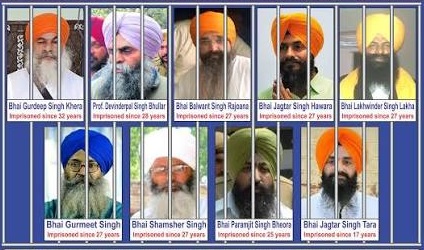
The issue of the release and parole of Bandi Singhs—Sikh prisoners whose continued incarceration has remained a longstanding religious, legal and political concern in Punjab—is once again emerging as a significant fault line in the state’s socio-political landscape. Recent developments, including renewed demands for the release of long-incarcerated prisoners and the growing mobilisation of Sikh organisations, indicate that the issue is moving beyond individual cases and increasingly becoming a broader question of justice, representation and Sikh identity.
The immediate implication of granting parole to prominent Bandi Singhs would be the likely strengthening of mobilisation around their release. Parole, although legally a temporary measure rather than permanent freedom, could be interpreted by supporters as recognition of the legitimacy of their longstanding demands. The release of individual prisoners could therefore generate renewed momentum for campaigns seeking permanent release, remission or commutation of sentences for other prisoners. The recent Punjab-wide bandh and continuing agitation by the Qaumi Insaaf Morcha demonstrate that the issue already possesses considerable mobilisation potential.
At the political level, parole could create both opportunities and risks for Punjab’s major political parties. Sikh organisations and sections of the political spectrum are likely to portray such decisions as a step towards addressing what they describe as historical injustice. Political parties may consequently seek to associate themselves with the issue, particularly as the demand has traditionally attracted support across different Sikh groups. At the same time, excessive political ownership of the issue could intensify competition between parties and organisations over Sikh representation, potentially reinforcing existing divisions between moderate and hardline sections. Recent reporting has already highlighted such differences within the Sikh community.
The security implications would depend largely on the circumstances and public conduct surrounding the release. The return of prominent and long-incarcerated individuals to Punjab could attract large gatherings, religious programmes and political events, creating temporary law-and-order challenges. There is also a possibility that radical or fringe elements could attempt to use their public visibility and symbolic status to revive dormant narratives relating to militancy and perceived historical grievances. However, such an outcome should not be assumed automatically: the broader impact would depend on the individuals’ post-release activities, community response and the manner in which authorities manage their reintegration.
A further implication concerns the relationship between Sikh religious institutions, civil society and the state. The continuing involvement of the Shiromani Gurdwara Parbandhak Committee (SGPC), which has previously undertaken large-scale campaigns for the release of Bandi Singhs, indicates that the issue retains substantial religious and institutional significance. If parole is granted selectively, it may reduce immediate tensions but could simultaneously create expectations that similar relief should be extended to other eligible prisoners. Conversely, prolonged denial of relief may provide mobilisation groups with an additional grievance around which to organise protests, bandhs and civil-disobedience campaigns.
The issue also carries implications for Punjab’s political discourse. For many supporters, Bandi Singhs are not viewed merely through the framework of criminal convictions but as prisoners connected to the turbulent period of militancy and the subsequent grievances of the Sikh community. This competing interpretation—between a purely legal-security framework and a political-historical framework—has allowed the issue to remain relevant decades after the original cases. The recent escalation of protests demonstrates that the matter can rapidly move from a prison-related issue to a wider question of community sentiment and state legitimacy.
Ultimately, the impact of parole will depend less on the release of individual prisoners itself and more on what follows. If parole is accompanied by transparent legal procedures, clear conditions and effective engagement with Sikh religious and civil-society institutions, it could help reduce immediate tensions and create space for a more structured resolution of the wider issue. If, however, parole is perceived as selective, politically motivated or insufficient, it could instead strengthen demands for permanent release and provide fresh momentum to organisations already advocating agitation.
Thus, the Bandi Singh issue is evolving from a long-standing demand for individual prisoner release into a broader test of Punjab’s political management of historical grievances, Sikh identity and law-and-order concerns. While parole could provide an opportunity to lower tensions, it may simultaneously increase expectations and mobilisation. The key challenge for the state will therefore be to balance legal requirements, public sentiment and security considerations while preventing the issue from becoming a catalyst for renewed polarisation or radical mobilisation in Punjab.