
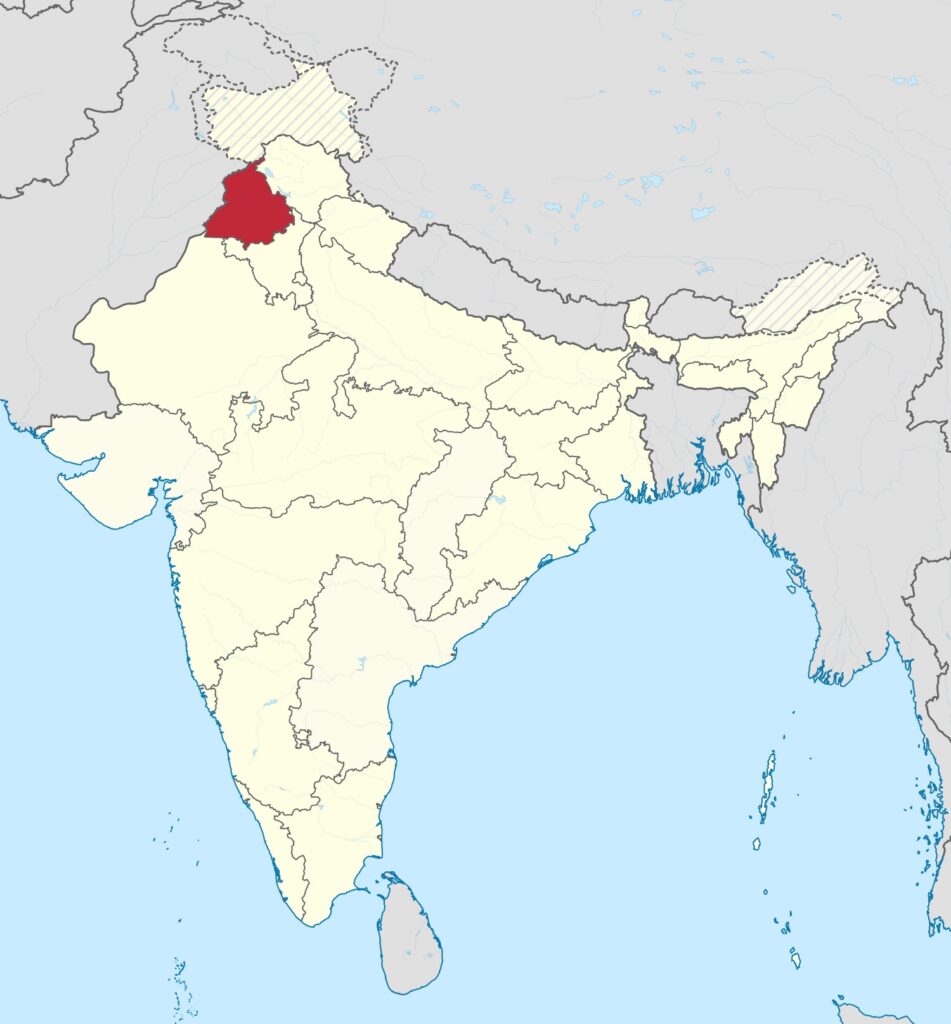
Punjab’s story in the closing decades of the 20th century is one of profound resilience. Once scarred by militancy and violence linked to the Khalistan movement from the mid-1980s to the mid-1990s, the state has steadily rebuilt itself through democratic processes and a collective rejection of separatism. Indian Sikhs, who form most of the Punjab’s population, have repeatedly chosen integration, progress, peace, and unity within India’s democratic framework. This path reflects not only a practical response to past suffering but also a deep-rooted commitment to the core values of Sikh dharma – truth, justice, service, and the protection of the vulnerable.
The militancy that gripped Punjab during the 1980s and early 1990s was effectively ended by the mid-1990s through concerted efforts of the Punjab Police, led by Sikh officers, backed by strong local community support and democratic institutions. The people of Punjab overwhelmingly rejected the demand for a separate Khalistan, choosing instead the path of peace, development, and full participation in India’s democracy.
Yet, a small number of fringe elements in India and the Sikh diaspora continue to organize commemorative events for personalities linked to that earlier militancy. Every year on the death anniversary of Paramjit Singh Panjwar, former chief of the Khalistan Commando Force (KCF) who was killed in Lahore in 2023, limited gatherings take place in Panjwar village in Tarn Taran district and among diaspora groups in New York. These events describe him as a “shaheed” and feature samagams and tributes, often amplified by diaspora media. The KCF, under leaders including Panjwar, was responsible for several major acts of violence during the militancy years.
Notable incidents include the 1995 suicide bombing assassination of Punjab Chief Minister Beant Singh in Chandigarh, which killed 16 others; the 1989 Thapar Engineering College massacre in Patiala, where 19 students were shot dead in their hostel; and the 1991 Sialba Majri massacre in Ropar, in which 27 civilians were killed. Such attacks not only deepened divisions but also inflicted immense suffering, with most victims being Sikh civilians, intellectuals, and security personnel. These fringe commemorations, however, remain confined to small sections and do not reflect the sentiments of the larger Sikh community in Punjab. Official estimates place total militancy-related deaths between 1981 and 1993 at around 21,000, with the overwhelming majority being Sikhs. Independent data from the South Asia Terrorism Portal records 11,694 civilian fatalities, of whom 7,139 were Sikhs.
By 1993, militant incidents had sharply declined due to community cooperation and targeted policing.
In the 2022 Punjab Assembly elections, candidates and parties openly aligned with radical or separatist views secured less than 3 per cent of the vote share, while mainstream parties focused on governance and development received decisive mandates. High voter turnout in subsequent polls further underscores the Sikh population’s continued faith in democratic participation and firm rejection of violence and separatism. Mainstream Sikh institutions, including the Shiromani Gurdwara Parbandhak Committee (SPC), have prioritized religious congregations (gurmat samagams), gurdwara management, education, and social welfare over any endorsement of separatist commemorations. This approach is firmly rooted in Sikhism’s core values of justice, service (seva), and courage in upholding dharma.
Historically, Sikhs have made remarkable contributions to India despite being a small minority. In the freedom struggle against British rule, they accounted for 93 out of 121 freedom fighters hanged and 2,147 out of 2,626 sentenced to life imprisonment. At the allianwala Bagh massacre of 1919, nearly 799 of the approximately 1,300 martyrs were Sikhs. The community played pivotal roles in the Ghadar Movement, the Akali Movement for gurdwara reform, and the Indian National Army. Post-Independence, Sikhs have excelled in the armed forces- with the Sikh Regiment earning numerous gallantry awards- as well as in agriculture, sports, business, and public service. Icons such as Guru Tegh Bahadur, who sacrificed his life in 1675 defending the religious freedom of Kashmiri Pandits, embody the Sikh tradition of protecting the vulnerable and upholding righteousness for all.
Commemorating death anniversaries of armed militant leaders’ risks glorifying a painful chapter that claimed thousands of lives, predominantly Sikh. Instead, the Sikh community has increasingly turned towards celebrating its true legacy: the teachings of the Gurus emphasizing equality. compassion, and fearless service to humanity. The langar system- free community kitchens that feed millions daily across India irrespective of caste or creed- remains a living example of these values.
Punjab’s post-militancy recovery, marked by agricultural revival, industrial growth, and improved education, demonstrates the tangible benefits of choosing democracy, peace, and unity over division. Today, most Sikhs in India take pride in their contributions to the nation’s unity and progress. Punjab’s democratic rebirth shows that lasting strength lies not in separatism or the glorification of violence, but in fidelity to Sikh dharma’s timeless principles of truth, justice, and harmonious coexistence within a diverse democracy.