
When the government of India decided to hold the first-ever exposition of the holy relics of the Tathagata outside their place of preservation, it had many options. The relics could have toured major cities. They could have been displayed in the grand facilities of the National Museum. They could have gone to Bodh Gaya, the most obvious site of Buddhist pilgrimage, or to Sarnath, where the Buddha gave his first sermon.
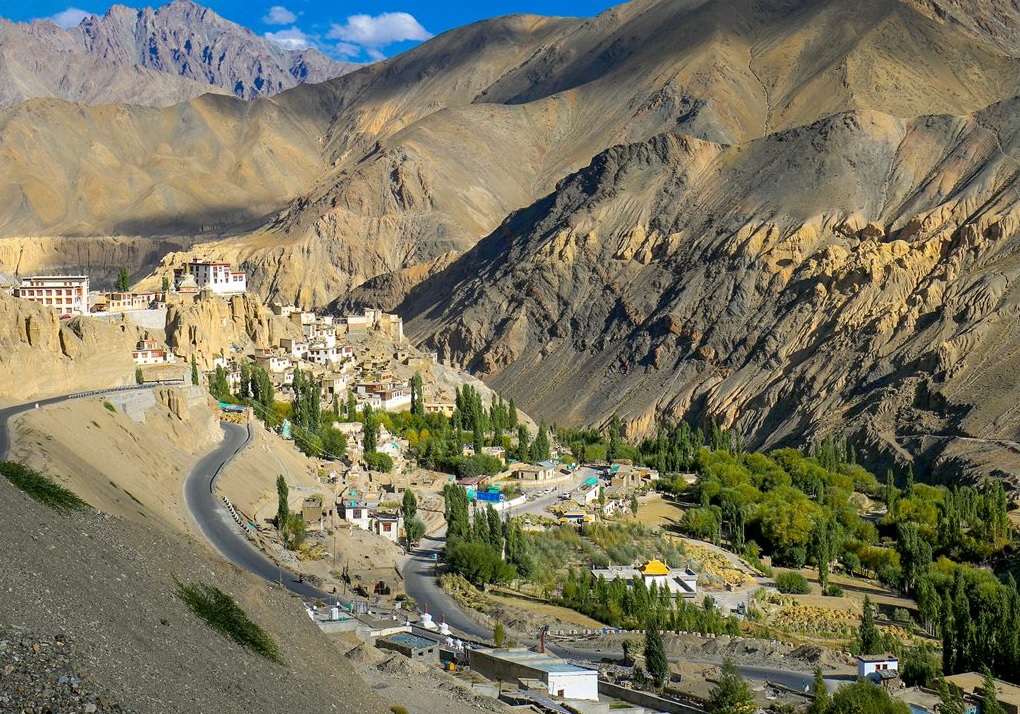
Instead, they went to Ladakh. The choice was not arbitrary. It carried meaning on multiple levels, and understanding that meaning requires understanding what Ladakh is, not as an administrative unit, but as a living Buddhist landscape with a history that stretches back more than a thousand years.
The exposition was titled ‘The Sacred Exposition of the Holy Relics of the Tathagata’ and began on May 1, 2026, coinciding with the 2569th Vesak Buddha Purnima. It was, by the account of those who attended, among the most significant spiritual gatherings that Ladakh has ever hosted.
A Land Shaped by the Dharma
Ladakh has been Buddhist for over a thousand years. The monasteries of Hemis, Thiksey, Diskit and Alchi are not tourist attractions with a spiritual veneer. They are living institutions. Monks study and debate within them. Festivals tied to the Buddhist calendar organise the rhythm of the year. The landscape itself, the high-altitude desert, the mountain passes, the glacial rivers, seems to have shaped a people inclined toward contemplation and endurance.
The Tibetan Buddhist tradition that dominates Ladakh places enormous importance on relics. The concept of the stupa, the hemispherical structure built to house sacred remains, is central to Buddhist practice. Ladakh’s landscape is dotted with stupas of every scale, from the large monastic stupas of Shey and Stok to the small roadside chortens that mark almost every path. The arrival of the Buddha’s own relics in this terrain was not simply a logistical event. It was a meeting of the sacred with the sacred.
Vesak, timed to coincide with the exposition’s opening, is the holiest day in the Buddhist calendar. It marks the birth, enlightenment and passing of the Buddha in a single observance. To bring the relics to Ladakh on this day was to layer one form of sanctity upon another. For devout Buddhists, the convergence was not coincidental. It was auspicious.
The monasteries of Hemis, Thiksey, Diskit and Alchi are not tourist attractions with a spiritual veneer. They are living institutions where monks study, debate and practice within a tradition that has endured for over a thousand years.
The Political Dimension
Ladakh is also, of course, a politically sensitive territory. It shares borders with both Pakistan and China. The Chinese claim to parts of Ladakh has been a source of ongoing tension, most visibly in the Galwan Valley clash of 2020, which resulted in casualties on both sides and fundamentally altered the tone of India-China relations.
In this context, the decision to hold a grand spiritual exposition in Ladakh acquires an additional dimension that cannot be entirely separated from the strategic. It is a statement of presence, of belonging and of cultural continuity in a region where India’s roots go deep. Buddhist civilisation in Ladakh predates any modern territorial dispute by centuries. The relics of the Buddha, originating from Kapilavastu in Uttar Pradesh and displayed in Leh, draw a line of cultural connection across the entire northern arc of the country.
This is soft power deployed on home soil. It tells a story about India’s relationship with its northern frontier, not through military posture, but through civilisational assertion. The message is both inward and outward: to Indians, that Ladakh is culturally and historically integral to the nation; to the world, that India’s Buddhist heritage is a living reality, not a relic of a vanished past.
Union Home Minister Amit Shah’s presence at the exposition on Buddha Purnima added a further layer of political significance. His description of attending the event as a ‘moment of profound good fortune’ was personal in tone but carefully chosen in context.
What the People Experienced
The exposition was expected to draw monks, pilgrims, scholars and dignitaries. It drew all of them, and more. Devotees arrived from across India and from Buddhist communities around the world. The relics were received at Kushok Bakula Rimpochee Airport with traditional honours, prayers from Rinpoches and monks, and a ceremonial procession through Leh that drew people from their homes in numbers rarely seen for a non-festival event.
Alongside the main exposition, a carefully designed programme of cultural and academic events ran parallel. Meditation sessions, interfaith dialogues, conferences on Himalayan Buddhism, film screenings on the life of Kushok Bakula Rinpoche, and a special photo exhibition titled ‘Beyond the Pass: The Shared Spirit and Ethnic Tapestry of Ladakh’ at Leh Palace. These were not peripheral additions. They were part of a deliberate effort to make the exposition not just a viewing event but an intellectual and spiritual experience with lasting effects.
The schedule extended beyond Leh to the Zanskar Valley from May 11 to 12. Zanskar, one of the most remote and deeply Buddhist valleys in the world, rarely receives this kind of national or international attention. Its inclusion was a thoughtful gesture toward a community that often feels peripheral even within Ladakh itself.
Ladakh was chosen for this exposition because it deserved to be chosen. It is a place where Buddhism is not heritage in the museum sense but a living reality embedded in landscape, language and daily practice. The Buddha’s relics did not merely visit Ladakh. In a meaningful sense, they returned to a world that had always been shaped by what the Buddha taught.