
Author Dr. Mohit Sharma
Punjab today faces an evolving security challenge that bears little resemblance to conventional cross-border threats. Instead, it is shaped by a convergence of digital recruitment, organised crime, narcotics trafficking, and cross-border facilitation networks operating with minimal visibility but significant reach.
Recent investigations and enforcement actions have pointed towards hybrid criminal ecosystems allegedly coordinated by Pakistan-based handlers, including individuals such as Shahzad Bhatti and Ajmal Gujjar. Rather than relying on direct infiltration, these networks are reported to exploit internal vulnerabilities by combining online recruitment with illicit supply chains and local criminal infrastructure.
Punjab’s strategic location along the India-Pakistan border has historically made it a gateway for trade, culture, and agriculture. Today, the same geography also makes it vulnerable to narcotics smuggling, illegal arms movement, and other forms of organised crime. Investigative patterns indicate that these are often interconnected rather than isolated activities, forming part of a broader transnational ecosystem that links cross-border supply chains with domestic distribution networks.
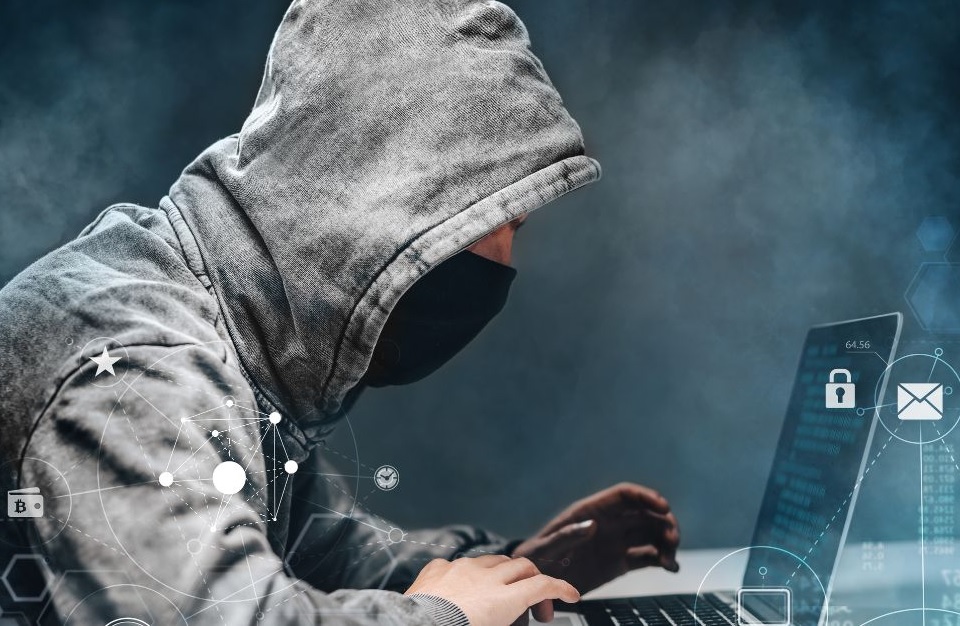
The most significant shift, however, lies in the digital domain. Social media platforms have increasingly become recruitment and screening environments where vulnerable individuals are identified through online interactions. Initial engagement often moves to private messaging applications before shifting to encrypted communication channels. Recruits are reportedly offered financial incentives for seemingly harmless tasks such as sharing content or photographing locations, which can gradually escalate into reconnaissance, logistics, or operational support.
This decentralised and transactional model enables external handlers to influence activities inside India without maintaining a physical presence. It also creates a low-cost, high-reach system that is considerably harder for conventional law enforcement agencies to detect during its early stages.
Equally important is the financial backbone that sustains these networks. Narcotics trafficking, particularly heroin routes linked to cross-border corridors, continues to generate illicit revenues that can fund recruitment, logistics, and operational continuity. Organised crime therefore functions not merely alongside these networks but as an enabling infrastructure that provides both financial resources and logistical capability.
The result is an adaptive system in which command remains insulated across borders while execution is outsourced to locally recruited individuals. This separation between planners and operatives presents a significant challenge for traditional security frameworks, which were primarily designed to counter hierarchical organisations rather than decentralised networks operating simultaneously in physical and digital spaces.
Yet, amid these legitimate security concerns, it is equally important to recognise another dimension of the challenge, the risk of Punjab’s identity becoming unfairly associated with the very threats it is confronting.
Repeated focus on narcotics, organised crime, and cross-border activities can inadvertently create a narrative that overshadows Punjab’s extraordinary contribution to India’s nation-building. Whether intentional or simply an unintended consequence of sustained criminal activity, such perceptions risk tarnishing the image of a state whose history is defined far more by sacrifice, resilience, and patriotism than by the criminal networks seeking to exploit it.
Punjab occupies a unique place in India’s national story. The state produced some of the country’s greatest freedom fighters, including Bhagat Singh, Udham Singh, Lala Lajpat Rai and Kartar Singh Sarabha, whose sacrifices helped shape India’s struggle for independence.
Its contribution has continued well beyond Independence. Punjab has consistently supplied a disproportionately large number of personnel to the Indian Armed Forces, with Sikh and Punjabi soldiers serving with distinction in every major conflict. Their courage and sacrifice remain central to India’s national security.
The state’s influence extends equally to sports, industry, and culture. Sporting legends such as Milkha Singh, Yuvraj Singh and Harbhajan Singh have inspired generations of Indians. Entrepreneurs such as Sunil Bharti Mittal have built globally recognised enterprises, while Punjab’s entrepreneurial communities continue to play a vital role in India’s economy. Globally acclaimed artists including Gurdas Maan and Diljit Dosanjh have carried Punjabi culture to audiences across the world, strengthening India’s cultural influence.
It is therefore essential to distinguish between Punjab and those who seek to misuse its geography. Criminal and cross-border networks exploit the state’s strategic location, economic connectivity, and social openness precisely because of its importance, not because they represent the people of Punjab.
Addressing this challenge requires more than conventional policing. It demands real-time monitoring of online recruitment, disruption of illicit financial flows, stronger intelligence sharing, enhanced inter-agency coordination, and sustained investment in education, employment, and digital awareness to reduce vulnerabilities that hostile networks seek to exploit.
Punjab’s security challenges should therefore be understood as part of a wider national security framework rather than as isolated regional issues. The state is both a frontline border region and a critical transit corridor within a larger transnational network that spans physical, financial, and digital domains.
Punjab today is engaged in an invisible but persistent battle. The challenge is no longer defined solely by physical borders but by the ability of criminal and hostile networks to exploit technology, finance, and organised crime. Countering these threats requires dismantling the networks themselves while ensuring that Punjab’s enduring legacy of patriotism, military service, entrepreneurship, and cultural leadership is neither overshadowed nor unfairly judged by the actions of those who seek to exploit it.